


Go Indo is a proud travel-specialist of Flores island. Not only is this beautiful island the home and roots of the Go Indo family, it is as well an unique travel destination. With enthusiasm, while caring about the local community and environment, we’d love to show you our home. Get off the beaten tourism track and travel fair and far to Flores with Go Indo.
Go Indo is a proud travel-specialist of Flores island. Not only is this beautiful island the home and roots of the Go Indo family, it is as well a unique travel destination. With enthusiasm, while caring about the local community and environment, we’d love to show you our home. Get off the beaten tourism track and travel fair and far to Flores with Go Indo.
Flores Highlights
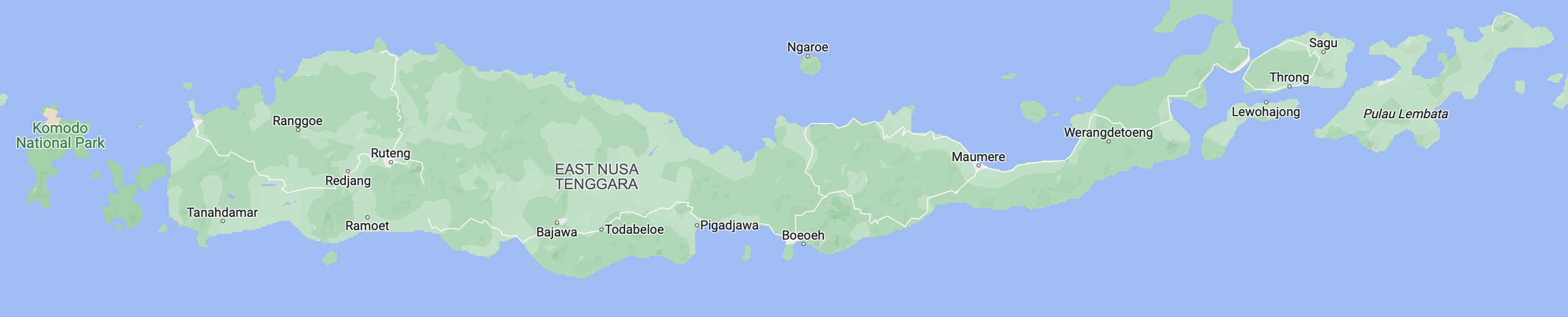
Flores is the perfect destination for travelers seeking to avoid crowded tourist paths. Home to several UNESCO World Heritage Sites, including Komodo National Park, Kelimutu National Park with its three-colored crater lakes and the traditional villages in Ngada. Beyond these iconic spots, Flores offers many more beautiful places to explore. Discover it all with Go Indo!
Komodo National Park & Labuan Bajo:
- Padar island: uniquely shaped island with panorama viewpoint over its beaches and valleys.
- Long beach: One of the best pink coloured beaches of Komodo National Park.
- Komodo island: Witness the Komodo dragons in its natural habitat during a trekking.
- Taka Makassar: Seabank in the middle of the ocean.
- Siaba Besar: Colourful coral reefs guarded by many turtles.
- Goa Rangko: Clear water cave where you can swim, reachable by small boat.
- Batu Cermin: Mirror stone cave, not far from Labuan Bajo.
- Bukit Golo Moro: Scenic view point of Komodo National Park.
- Hatamin island: Good snorkeling spot. There is a traditional Bajo village located on Hatamin island.
Manggarai regency:
- Pulau Mules: Splendid remote island where trekking, camping and snorkelling can be done.
- Wae Rebo: Traditional, remote village high in the mountains.
- Tengkulese: Isolated, wild waterfall surrounded by lush ricefields, best reachable from Ruteng.
- Ruteng Pu’u: Unique traditional village, still quite unknown for tourism.
- Lingko Cara: Spiderweb shaped ricefields, possible to do trekking & picnic here.
- Ruteng hiking and cycling: Don’t miss out on the mountainous view points, waterfalls and green scenery, just outside the town of Ruteng.
- Kampung Nekang: visit a typical Manggarai neighbourhood, their traditional market and have a coffee with the locals.
- Museum Liang Bua: Archeological site within a cave opening where the extinct ‘Homo Flores‘ has been found.
More in Manggarai regency:
- Wasewengke: Panoramic, wide view point on top of a table mountain. Little Maria cave on top of Wasewengke for locals to pray.
- Todo: Traditional village
- Lembor: Village in the valley. Possible to do a ricefield tour.
- Cunca Rami: Waterfall
- Cunca Wulang: Waterfall and canyon, reachable after short trekking (25 minutes).
- Poco Ranaka (2300m): highest volcano of Manggarai. Morning trekking with splendid views on the way. The volcano owes its name to parrots or ‘Ka’ in Manggarai language.
- Gunung Mbeliling (1300m): Mountain trekking in beautiful forest nature park. Recommended for birdwatchers!
- Sano Nggoang: Biggest crater lake of Flores, located at Gunung Mbeliling.
Ngada regency:
- Ngada ethnic traditional villages: Belaragi, Guru sina, Bena, Tololeo, Wolondopo, Langa and Magilewa. The villages can be reached by trekking or car.
- Riung: Coastal town in front of the national park ‘Pulau 17’. Here is the perfect place to do some island hopping in between the 17 bounty islands of the national park. Amazing for snorkelling as well!
- Moke processing farm: In Aimere are plentiful farmers producing the famous local liquor. Here you can see the full process of Moke making & do some tasting yourself as well!
- Wolobobo: Meaning ‘sleepy mountain’, a beautiful view point above the clouds.
- Inerie volcano (2245m): Highest volcano of Flores island. Quite challenging trekking to the top which takes around 3-5 hours.
- Ogi waterfall: Only a 15 minute walk from Bajawa.
- Hotspring So’a: take a warm bath in the natural hot springs sprouting from the volcano Inerie.
- Hotspring Malanage: Volcanic hotsprings, there’s a cold and hot water river.
- Inerie vulcano: it takes a 4-5 hour hike until the top of this majestic volcano.
- See the process of making the local ‘arak’ liquor.
- Padang savana mausui: Beautiful savannah landscape, great for camping spot or enjoying the trekking views.
Nagekeo regency:
- Tutubhada: Traditional village
- Kawa: Traditional village
- Gunung Ebulobo (2096m): Volcano top can be reached between 3-4 hours rewarding you with a wide view.
Ende regency:
- Kelimutu national park: Three-coloured crater lake of Kelimutu vulcano.
- Waturaka ecotourism: A local village awarded as ”The best ecotourism village” in 2017 by the Indonesian ministry. Learn local crafts, follow a cooking class and merge with locals in Waturaka.
- Exile house of Bung Karno, the founding father and first president of Indonesia.
- Tenun Ikat: Museum of the traditional weaving practices of Ende’s
- Pantai Penggajawa & Pantai Batu Biru: Blue stone beach. Light blue stones make this volcanic beach a true eyecatcher.
- Pantai Nanganesa: Black sandy beach with view of mount Iya.
Sikka regency:
- Pantai Koka: Beautifully shaped beach with 2 bays.
- Pulau Babi: Small white sandy beach island reachable by boat from Maumere. Possible to do snorkelling here and explore the little village on the island.
- Kampung Wuring: Village of the Bugis people, originally from Sulawesi, living on wooden houses above the sea.
- Blikon Blewut museum: Old museum of traditional weaving.
- Nangahale: See the process of salt production and traditional boat manufacturers.
East Flores regency:
- Cathedral church of the Reinha Rosary
- Danau Asmara: Calm and deserted lake in the forest of East Flores.
- Pantai Kwuta: White sandy beach.
- Tanjung batu payung: Umbrella-shaped rock formation.
- Larantuka: Fishermen town. During Eastern celebrations called ”Semana Santa” pilgrims coming from far to witness the procession.
Lembata regency:
- Bukit Cinta: view point on top of Lembata’s hilly landscape.
- Pantai Waijarang: Beautiful, calm beach with view of Ile Mandiri. Our homepage photo, is in case taken from this beach!
- Lamalera: Whale hunting village.
History & Culture
Cabo de Flores: a piece of history
In the eastern seas of the Indonesian archipelago blooms Flores island. Flores belongs to the Lesser Sunda Islands, is estimated around 14,000 km2 and inhabits 1,8 million Floresians.
In the 16th century Portuguese traders were the first Europeans who came to Flores during their search to dominate the lucrative spice trade. Amazed by the islands lush wildlife and many flowers, they named the island ‘Capo de Flores’ meaning cape of flowers. Due to the Portuguese colonization and Dutch missionaries in the isolated Manggarai regency, the majority of the inhabitants are now Catholic. Although, the Floresians still maintain the traditions of their ancestors in the current practice of their religion. Flores has many interesting traditions that our guides are happy to tell you about.
Local inhabitants
The cultural richness of Flores is reflected in the different languages, traditions and lifestyles of the local people. The most used languages are: Manggarai, Ngada, Nagekeo, Bajawa, Ende, Lio, Palu’e, So’a, Sika and Lamaholot! The Indonesian language, called Bahasa Indonesia, became the official language for all Indonesians according to the declaration of independence of Indonesia in 1945. A Floresian therefore speaks at least 2 languages: the language of his tribe and Indonesian.
Although Catholicism is the dominant religion, various faiths coexist peacefully in Flores. Many ancient customs and traditions can still be found within the practice of the local religion. Besides the celebration of for example Christmas and Easter, special ceremonies aimed at honoring ancestors and natural spirits are an everyday practice.
The local inhabitants mostly live from agriculture. Each family owns a piece of land where they mainly grow rice, cassava, vegetables, coffee, macademia, cacao etc. Most families live from their own harvest and gain income by selling harvest as well.
Travel tips for Flores
Preparation from your home country
- Consult your healthcare provider about travel vaccines before heading to Indonesia.
- Verify your health insurance; travel insurance may be partially covered. Consider temporary travel insurance for unexpected costs.
- ATMs in Flores accept debit and credit cards, so you don’t need to bring IDR or dollars from home. However, credit card payments may not be accepted in restaurants or hotels.
- Bring personal toiletries like contact lens solution, menstrual care products, and sunscreen, as local pharmacies offer limited options.
-
Check tour availability and flight schedules. Boat tours to Komodo National Park may be limited during the rainy season, and fewer flights are available during the low season. Plan ahead to avoid surprises.
Wet and dry season
Flores has two seasons: wet (Nov-Mar) with heavy rainfall and dry (Apr-Oct) with shorter rain showers and hot days. The landscape changes, with Komodo National Park turning yellow and brown in the dry season, and lush green after the wet season. The countryside stays green year-round due to tropical rain. Some weather tips for travelling in Flores:
- Don’t forget warm clothes! Nights in the mountains can be cool (12-18°C).
-
Protect yourself from the sun: pack SPF and hats for trekking.
Respecting the local culture
Flores inhabitants are very hospitable and welcoming. To ensure a positive travel experience & contribute to a healthy cultural exchange all you really need is a smile! And keep in mind our suggestions:
- Always use your right hand to give or receive items, as the left hand is considered impure in Indonesia.
- Swimwear is fine at the beach. Do get dressed when engaging in other activities in the town.
- When visiting traditional villages, churches or sacred sites cover shoulders and knees. Often a sarong is provided.
- Don’t give money to children. If you’d like to give gifts, please check with your tour guide for the best approach.
- Small tipping is customary in Indonesia when someone offers a service (Carrying a suitcase, motorbike/car parking security, visiting a place of worship etc). The tips are given with the right hand or donated in a donation box. A tipping can range from 10K IDR to 50K IDR, depending on the service.
Mosquitos
To protect yourself from mosquitoes, take precautions, especially during the rainy season (1.5 hours after sunrise and before sunset). In high areas like Ruteng, Moni, and Bajawa, there are very few mosquitoes. Here’s some tips:
- Use DEET insect spray, such as Soffel or Autan, which are widely available throughout Indonesia.
- When walking in forests, mangroves or parks wear protective clothing.
- Consult your healthcare provider about malaria tablets and the Dengue vaccine.
- Still some questions? Don’t hesitate to contact us.
Food & drinks
- Flores is known for its locally produced alcohol, including Arak, Moke, and Sopi, which are often used in local ceremonies. Ask your Go Indo guide for a visit to see the fascinating process of making these traditional liquors.
- Only drink bottled mineral water, not from taps. The tapwater in the mountainous areas is drinkable after cooking but bottled mineral water is available everywhere. Brush your teeth with mineral water to avoid diarrhoea.
- Warungs (local restaurants) serve Indonesian food everywhere, while western food is found in larger restaurants. Inform your Go Indo guide about any dietary preferences or allergies. Vegetarian options are common, but vegan options may be limited.